
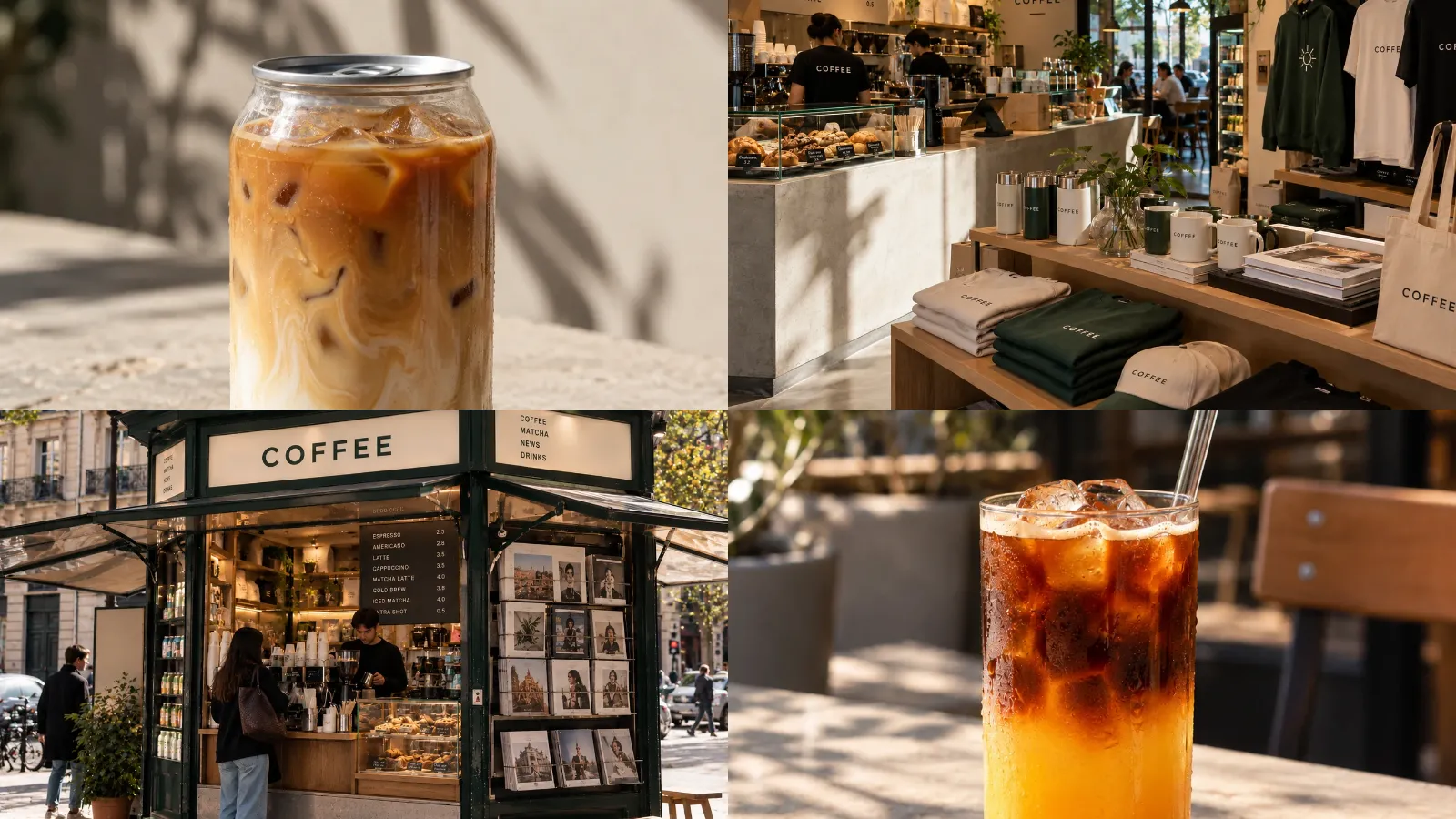
Coffee shops are no longer competing solely to serve the best espresso. In 2026, the coffee business is exploring new ways to attract customers: Instagram-worthy packaging, old newsstands turned into coffee shops, experimental drinks, and even daytime DJ parties.
Some of these concepts reflect changing consumer habits, while others are designed to stand out in an increasingly competitive market. Behind every trend lies a business decision: what to sell, where to sell it, how much to charge, and how to build a brand that customers remember.
6 Coffee Shop Trends Reshaping the Industry in 2026
1. Clear PET Cans: The New Look of Coffee to Go
Paper cups have a new competitor: clear PET cans. Typically made from polyethylene terephthalate (PET) plastic and sealed using specialized equipment, these containers allow coffee shops to serve iced lattes, cold brews, and other cold beverages in packaging that resembles a traditional soda can.
Their biggest selling point is visual appeal. Layers of milk, coffee, and ice remain fully visible, making each drink particularly photogenic.
For coffee shops, this presents an opportunity for differentiation and branding. A well-designed label can turn an ordinary takeaway coffee into a walking advertisement. However, businesses also need to consider packaging costs, equipment investments, and environmental impact.
2. From Newsstands to Coffee Shops: The Rise of Grab-and-Go Coffee
Traditional newsstands are finding a second life. In Spain, Good News has developed a business model that combines takeaway coffee, magazines, and convenience items in former urban newsstands.
In Mexico, Café Tormenta, located in Mexico City’s Roma neighborhood, has transformed a small street kiosk into a gathering spot for coffee and music lovers. Meanwhile, in New York City, Casa Toscana, near Bryant Park, took the concept a step further. Its owner reportedly invested around $150,000 to convert a newsstand into an Italian coffee shop, increasing sales more than fivefold, according to his own account.
From a business perspective, this format offers an interesting opportunity near office buildings and business districts: small spaces, streamlined menus, quick service, and affordable prices for workers looking to grab their daily coffee without the wait. However, profitability depends heavily on location, customer traffic, and the local permits required to operate.
3. Signature Drinks: Unexpected Coffee Combinations Beyond the Classic Latte
Coffee with orange juice? Espresso with tonic water? Coffee shop menus are making room for combinations that might have seemed unusual just a few years ago.
Some of the most interesting creations include the espresso tonic, made with espresso, tonic water, and ice; orange cold brew, which combines cold brew coffee with orange juice; and drinks featuring yuzu, pistachio, and other unexpected ingredients.
Another eye-catching option is the strawberry matcha latte, which blends matcha, milk, and strawberries.
These recipes give coffee shops an opportunity to refresh their menus, introduce seasonal specials, and attract customers eager to experiment with new flavors. From a business standpoint, the challenge is finding original combinations that are quick to prepare without compromising consistency or quality.
4. From Brewing Coffee to Building a Wardrobe: The Rise of Coffee Shop Merch
Caps, hoodies, T-shirts, tumblers, and tote bags. More coffee shops are finding ways to make customers want to wear their brands long after leaving the store.
In Madrid, Hola Coffee sells T-shirts, caps, and accessories featuring its own designs, while Osom Coffee offers branded apparel, mugs, and other merchandise. The trend extends beyond Spain: Cloud Picker, in Dublin, also sells clothing and accessories featuring its branding.
But simply printing a logo on a T-shirt isn’t enough. For customers to actually want to wear their favorite coffee shop’s merchandise, the design needs to stand on its own. A recognizable visual identity, thoughtful aesthetics, and a loyal community are essential.
Beyond generating additional revenue, merchandise turns customers into brand ambassadors, extending a coffee shop’s visibility far beyond its physical location.
5. Coffee Raves: Trading Alcohol for Caffeine on the Dance Floor
Imagine walking into a coffee shop at 11 a.m. on a Saturday and finding electronic music, people dancing, and a counter lined with iced lattes.
That’s the idea behind coffee raves, also known as coffee parties: daytime gatherings that combine specialty coffee, DJs, and an alternative to traditional alcohol-centered nightlife.
In Spain, Barcelona Coffee Rave and Caffeine Social Club have helped popularize the format, particularly among consumers looking to socialize without staying out late.
For coffee shops, hosting these events can create additional revenue streams, attract new audiences, and strengthen the community surrounding their brand.
Of course, a successful coffee rave takes planning. Capacity limits, staffing, permits, music-related expenses, and an experience that goes beyond simply placing a DJ next to the espresso machine all need to be considered.
6. Luxury Coffee: When a Cup Costs More Than $10
While some coffee shops focus on competitive pricing, others are exploring the opposite end of the market: turning coffee into a premium culinary experience.
Think exclusive varieties such as Geisha coffee, limited-production microlots, beans sourced from renowned coffee estates, and brewing methods that require specialized expertise.
In this segment, a single cup can cost more than $10, particularly when rare coffees or exclusive tasting experiences are involved. The offering may also include artisanal pastries, imported ingredients, and more personalized service.
Customers aren’t just paying for the drink itself, but also for its origin, preparation, and exclusivity. This business model therefore requires extensive product knowledge and a customer base willing to pay a premium for a distinctive experience.
The 4 Ps of Marketing Behind Today’s Coffee Shop Trends
The 4 Ps of marketing, also known as the marketing mix, provide a framework for analyzing a company’s marketing strategy through four key variables: product, price, place, and promotion.
So, what do clear PET cans, converted newsstands, and DJ parties have in common? Although they may seem like completely different initiatives, they all address the same business challenge: standing out in an increasingly competitive market. Let’s use the 4 Ps to explore how these trends help coffee shops differentiate themselves, attract new customers, and build competitive advantages.
- Product: Clear PET cans add value through packaging, while signature drinks expand the menu and help coffee shops stand out from competitors. Merchandise, meanwhile, diversifies the product offering and turns brand identity into something customers can actually purchase.
- Price: Luxury coffee shops follow a premium pricing strategy built around differentiation. Rather than competing on price, they focus on increasing perceived value through exclusive ingredients, quality, and experiences that justify higher prices.
- Place: Converting newsstands into coffee shops reflects a strategy centered on proximity and convenience. Locations in high-traffic areas encourage impulse purchases and help attract customers who prioritize speed and accessibility.
- Promotion: Coffee raves serve as experiential marketing initiatives that support customer acquisition and retention. At the same time, branded merchandise and eye-catching packaging create opportunities for organic exposure and strengthen brand recognition.
Not every coffee shop needs to embrace all six trends. The real opportunity lies in identifying which ones align with its target audience, location, and value proposition.